
A food manufacturer cannot compare curd powder on flavour alone. You need to establish what the powder contains, how it was dried, whether it works in your formulation, and what the quoted landed cost includes. By the end, you will have a practical checklist for comparing a Pune supplier, qualifying a sample, and approving production lots.
Key takeaways
- Define whether you need fermented milk, yogurt, cultured or carrier-based powder.
- Demand moisture, protein, fat, acidity, microbiological and carrier specifications.
- Test reconstitution, flavour, dispersibility and finished-product performance before approval.
- Compare Pune quotes using delivered cost, MOQ, shelf life and documentation.
What exactly is in the curd powder?
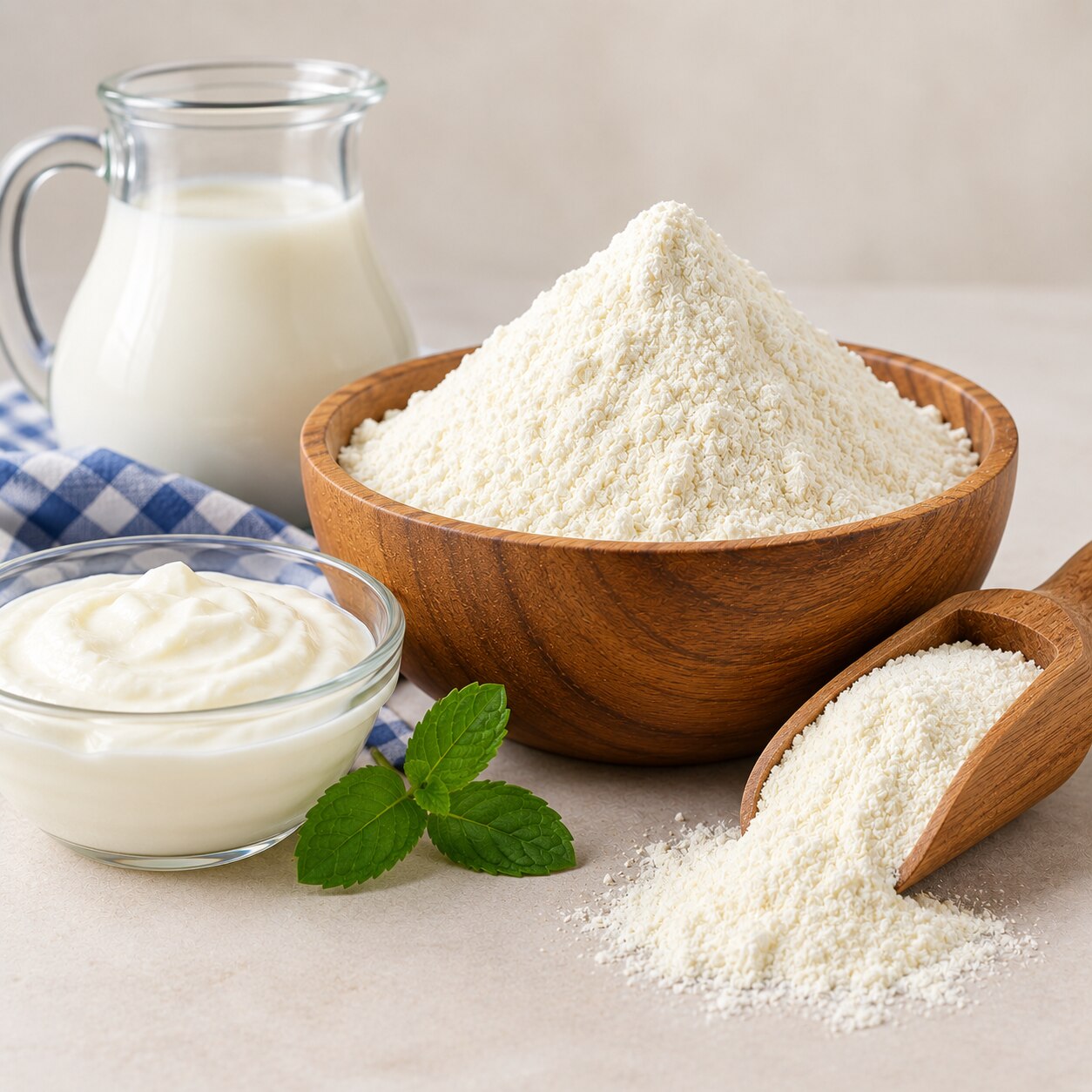
The name “curd powder” does not identify one composition. It can mean spray-dried fermented milk, yogurt powder, cultured-but-unfermented dairy powder, or a carrier-based formulation, so curd powder for food manufacturers must be matched to both the recipe and the intended label.
Request a full composition statement, not “dairy-based.” It must identify:
- Milk solids, fat, protein and lactose
- Live cultures or heat-treated curd
- Maltodextrin, stabilisers, anti-caking agents, salt, sugar and every other carrier
- The percentage of each carrier, not merely its presence
- Milk allergens, vegetarian status, and halal or kosher status where relevant
Maltodextrin or another carrier can improve spray-drying yield, reduce stickiness and make the powder easier to handle. It also dilutes dairy protein and changes the declared carbohydrate, sweetness, calories and reconstitution behaviour; a carrier-based powder is not nutritionally interchangeable with 100% dairy solids.
Check whether the declared culture system matches a Codex-style yogurt culture: Streptococcus thermophilus and Lactobacillus delbrueckii subsp. bulgaricus. The word “curd” alone proves neither fermentation nor culture survival, and heat treatment after fermentation can eliminate live cultures.
For any live-culture claim, require the viable count at the end of shelf life, test method and storage conditions. Then confirm that lactose, allergens, claims and ingredient declarations suit the finished product’s intended label.
Which process and specification details should you demand?
Judge the powder by its process record and specification sheet, not by appearance alone. Ask a curd powder supplier in Pune whether it is spray-dried or freeze-dried, the inlet and outlet temperature ranges used, and whether the fermented material is heat-treated before or after drying.
| Process | Technical effect to assess | Question to ask |
|---|---|---|
| Spray-dried | Efficient microbial control and handling; heat can reduce flavour freshness and culture survival | What temperature profile was used, and what protein, nutrient and culture-retention data support it? |
| Freeze-dried | Strong flavour and culture retention; higher cost and slower reconstitution can result | How were solubility, particle size and microbial control validated? |
| Heat-treated | Improves safety and shelf stability but eliminates or reduces viable cultures | Was treatment before drying or after drying, and is a live-culture claim still valid? |
Demand a specification showing moisture, water activity, bulk density, particle-size distribution, dispersibility or wettability, insoluble residue, pH or titratable acidity after reconstitution, protein, fat, lactose or total carbohydrate, ash and shelf life. Moisture alone does not predict caking or culture survival.
Require limits for total plate count, yeast and mould, coliforms, Salmonella, Cronobacter where relevant, Bacillus cereus, Staphylococcus aureus and other pathogens, tied to the intended Indian food category and hazard analysis. Also request:
- Validated storage temperature and relative-humidity limits, remaining shelf life at delivery, and evidence for the actual commercial pack size.
- Moisture-barrier or laminated inner-liner details, seal-integrity results, net weight, palletisation and storage instructions.
How do you test curd powder in the finished product?
Test curd powder in the finished formula, not only in a glass of water. For curd powder for food manufacturers, the correct inclusion rate depends on the application, acidity, salt, moisture, viscosity, and heat exposure; request an application-specific starting range rather than treating one rate as universal.
1. Reconstitute the sample at the manufacturer’s intended concentration and water temperature. Record wetting time, agitation method, fish-eyes, foaming, sediment after a defined hold period, acidity drift, and mouthfeel.
2. Run the test in the target product and compare the result with its acidity, salt, and moisture targets. Use these application checks:
| Application | Main checks |
|---|---|
| Sauces | Viscosity, acidity, heat stability, and separation |
| Seasoning blends | Flow, caking, salt balance, and flavour distribution |
| Instant mixes | Wetting, dispersion, sediment, and reconstitution time |
| Bakery fillings | Moisture migration, bake stability, and filling texture |
| Snacks | Adhesion, coating uniformity, and humidity-driven caking |
| Soups | Dispersion, viscosity, sediment, and reheating stability |
| Beverages | Solubility, foaming, acidity, and mouthfeel |
| Ready-to-eat products | Salt, moisture, storage stability, and process tolerance |
3. Repeat the test after pasteurisation, baking, or retorting when the product uses that process. A powder that dissolves in water can still fail in a high-protein or high-viscosity formula.
Approve the sample only after three checks: a representative production sample, performance in your formula, and a retained reference sample for comparison with later lots.
How do Pune quotes, bulk orders, and MOQ affect the price?
A curd powder price in Pune is not comparable until the quote states the minimum order quantity, pack size, and basis of sale. Ask whether it is ex-works, delivered to your Pune facility, or inclusive of GST and freight.
| Option | What the quote represents | Compare it with |
|---|---|---|
| Dairy-only spray-dried powder | Bulk moisture-barrier bag, with stated dairy solids, fat, moisture and heat treatment | Another spray-dried dairy-only grade in the same pack size |
| Carrier-based powder | Smaller pack, maltodextrin or another carrier, altered protein, carbohydrate and reconstitution behaviour | A grade with the same carrier percentage |
| Freeze-dried culture product | Higher culture-preservation focus, with different handling, storage and testing requirements | Another freeze-dried product with matching viable-count criteria |
The quoted figure changes with order volume, packaging format, dairy-solids percentage, fat content, moisture target, culture or heat-treatment status, drying method, carrier level, testing, private labelling, remaining shelf life and delivery distance. Do not compare a carrier-based powder with a dairy-only powder by headline price.
Request these commercial details in writing:
- MOQ for the bulk order and available pack sizes
- Manufacturing or dispatch location, batch size, lead time and stock policy
- Freight terms, delivery conditions and charges for testing or packaging
- Remaining shelf life at delivery and the actual commercial pack covered by shelf-life evidence
Calculate the cost per usable kilogram after freight, rejected material and mandatory testing or packaging charges. Prime Herbonix Health Products Private is a Pune-based option to assess only after it confirms these details for your required grade; do not infer MOQ or price from a brochure.
Related product
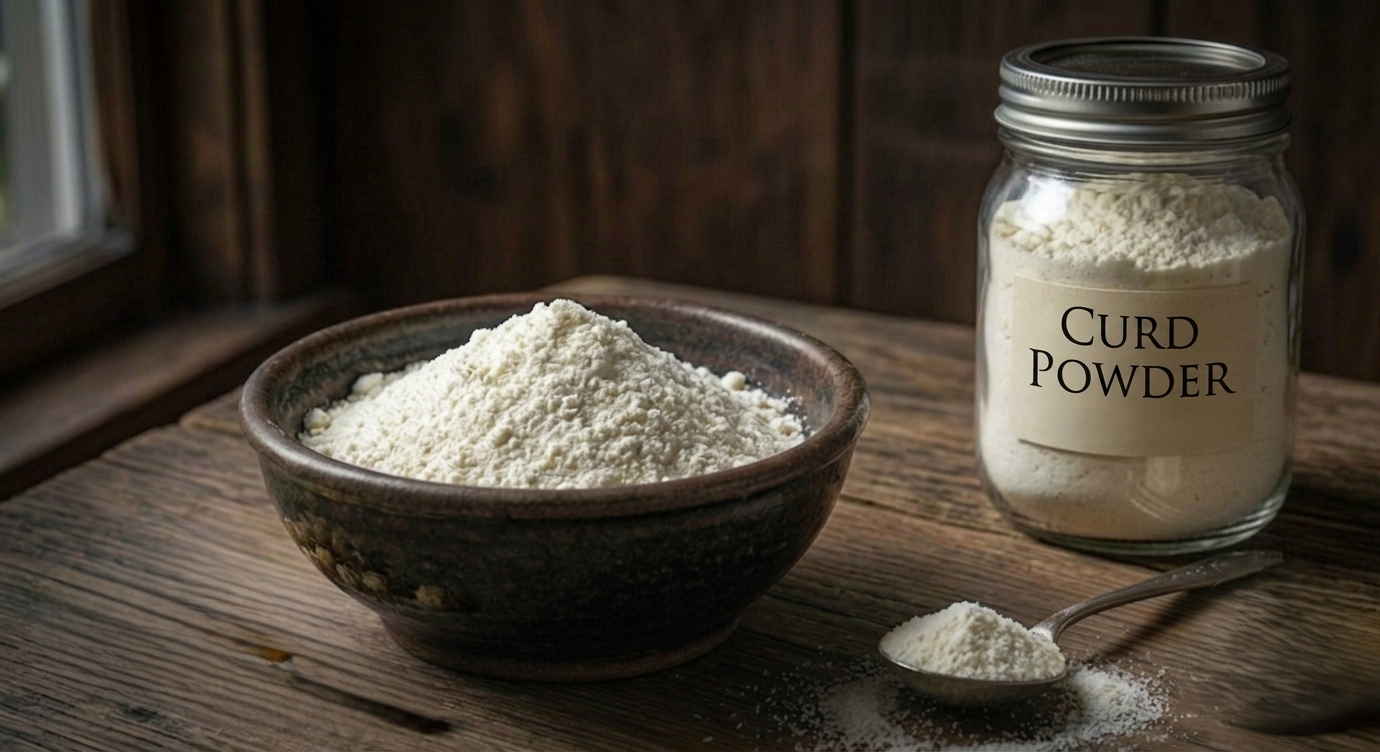 | FUNCTIONAL INGREDIENTS Prime Herbonix Curd Powder is a premium-quality dairy ingredient produced from carefully processed curd to retain its characteristic tangy flavor,... View product → |
What documents and checks qualify the supplier before approval?
A curd powder supplier in Pune qualifies only when its records prove repeatable lots, not when one attractive sample performs well. Start approval with documents, then verify the first shipment against them.
1. Request a lot-level certificate of analysis (COA) showing the lot number, manufacturing date, retest or best-before date, moisture or water activity, microbiology, sensory result, and packaging condition. Match every result with the approved specification.
2. Check the product category, ingredient declaration, claims, and label against the Food Safety and Standards Authority of India framework. “Probiotic,” “live culture,” “high protein,” and “source of calcium” require product-specific substantiation and compliant labelling; for live cultures, require the count at shelf life, test method, and storage conditions.
3. Agree microbiological acceptance criteria and the sampling plan before purchase. Define limits for the intended food category rather than accepting a generic “passes microbiology” statement.
4. Require validated storage temperature, relative humidity, oxygen and moisture protection, and the remaining shelf life promised at delivery. Confirm that the evidence covers the actual commercial pack size.
5. During the first shipment, inspect the liner, seals, odour transfer, caking, net weight, and pallet condition. Retain the approved sample, specification revision, COA, and receiving inspection record together, so changes in acidity, bulk density, moisture, or carrier ratio are detected quickly.
Frequently asked questions
What exactly is in curd powder?
Curd powder can contain spray-dried fermented milk, yogurt powder, cultured-but-unfermented dairy powder or a carrier-based formulation. Confirm the ingredient statement, dairy solids, carrier, cultures and processing method.
Which process and specification details should you demand?
Ask for the drying process, moisture, protein, fat, acidity, particle size, solubility, microbiological limits, shelf life, packaging and storage conditions.
How do you test curd powder in the finished product?
Check reconstitution, dispersibility, flavour, acidity, texture and microbiological results, then run a controlled finished-product trial against your target formula.
How do Pune quotes, bulk orders and MOQ affect the price?
Compare the curd powder price in Pune on a delivered-per-kilogram basis, including MOQ, pack size, freight, taxes, shelf life, lead time and payment terms.
What documents and checks qualify the supplier before approval?
Request the specification sheet, certificate of analysis, allergen statement, ingredient declaration, batch traceability records, food licence details and samples from a production batch.