
The right purchase depends on whether your formula needs whole-fruit solids and fibre or a smaller, defined dose of concentrated material. By comparing dose volume, assay basis, formulation behaviour, documentation and cost per serving, you can choose the input and write a purchase specification that suppliers can quote accurately.
Key takeaways
- Choose powder for whole-fruit positioning and extract for concentrated active delivery.
- Define extract ratio, marker compounds, solvent and test methods on the quotation.
- Approve identity, microbiology, heavy metals, pesticides and batch-specific assay results.
- Compare Pune suppliers through a controlled trial in your intended dosage form.
Choose powder or extract by the job your formula must perform
A 500 mg capsule may not hold a useful serving of whole-fruit powder, while a sachet can accommodate more material but needs stronger flavour control. Choose based on dose, label position and formulation budget.
| Material | What it supplies | Practical consequence |
|---|---|---|
| Whole-fruit powder | Ground fruit solids, including more native fibre and fruit material | Suits sachets or formulas where whole-fruit content and a simple ingredient story matter |
| Extract | Concentrated botanical material in a smaller quantity | Fits capsules and tablets more easily, but requires checks on carrier, assay and processing |
An extract can support a concentrated botanical position, but its carrier changes assay per gram, bulk density and the declared botanical equivalent. A 10:1 ratio alone does not prove ten times the active constituents; require the supplier’s basis, such as fresh fruit to extract or dry starting material to dry extract.
Compare cost per serving, not price per kilogram. Multiply the ingredient price per kilogram by grams used in one serving, then adjust for carrier percentage and the declared botanical equivalent delivered by that serving. A cheaper extract can cost more after flavour masking, blending or stability work.
For amla powder or extract for supplement manufacturers, buy powder when whole-fruit content, fibre or a simpler ingredient story matters. Buy extract when dose volume, a defined marker or a concentrated formulation matters.
What “extract” must mean on the purchase quotation
A quotation is comparable only when “extract” describes the material, its concentration basis and its test method—not just a percentage.
1. Write the identity as the fruit of Phyllanthus emblica L. Record Emblica officinalis Gaertn. as a synonym where the supplier uses it, and state the plant part. “Amla” alone does not identify the species or material.
2. Name the form: native fruit powder, aqueous extract, hydroalcoholic extract, spray-dried extract, or extract blended with maltodextrin or another carrier. State the extraction solvent or process and drying method.
3. Require the native extract ratio or DER, such as 4:1 or 10:1, and define its basis. Specify whether it means fresh fruit to finished extract, dry starting material to dry extract, or another calculation.
4. State the carrier percentage, assay marker, reference standard, analytical method, sample basis and acceptance limit. These details belong in your amla extract specifications because carrier content changes the botanical equivalent and assay per gram.
5. Reject “20% tannins” as incomplete. The supplier must identify whether this is a named-compound assay, total tannins or a colourimetric result, then provide the reference standard, sample preparation, test conditions and whether the result is on an as-is or dry basis.
A Folin–Ciocalteu result cannot be ranked against a named-compound chromatographic assay without harmonising the methods.
Build a batch-approval checklist for powder and extract
Approve an ingredient only against a batch-specific certificate of analysis. A generic specification sheet cannot prove that the released lot meets the agreed limits, so reject it from an amla powder bulk supplier.
| Form | Batch evidence required | Reject when |
|---|---|---|
| Powder | Botanical identity, plant part, whole fruit or fruit pulp, seed and fibre content, foreign matter, moisture or loss on drying, total ash, mesh or particle size, colour, flavour, bulk density, and batch microbiology | The supplier reports only “microbiology tested” or omits the released lot |
| Extract | Extraction process, solvent, DER, carrier percentage, drying method, marker assay, reference standard, and chromatographic or validated identity fingerprint | “10:1” appears without its starting-material basis or the assay method |
- Set numeric limits for total aerobic microbial count, yeast and mould, Salmonella, and Escherichia coli. Name the method or standard used for each result.
- For both forms, require lot number, manufacture date, retest date, moisture, heavy metals against the destination market’s limits with the analytical technique stated, pesticide residues, aflatoxins, residual solvents where relevant, and adulteration or substitution testing.
- Make the certificate of analysis show the product name, botanical name, plant part, lot number, test date, result, unit, specification limit, method, analyst approval, and release decision.
- Treat the marker assay as incomplete unless it states the marker, reference standard, sample basis, method, and acceptance limit. A supplier’s colour or flavour check alone cannot establish identity.
Match the ingredient to the dosage form and the claim you plan to make
1. Approve the ingredient only after a pilot blend shows that it works at the intended dose. A quotation proves raw-material identity, not capsule fill, tablet manufacture or drink performance.
2. For capsules and tablets, measure dose volume, bulk density, flow, segregation, lubricant demand and compression behaviour. A concentrated extract reduces fill volume, but maltodextrin or another carrier can alter flow, tablet weight and hardness.
3. For sachets and drink mixes, test wetting, dispersibility, sedimentation, acidity, flavour and colour with the selected sweetener. For gummies and liquids, check compatibility with pectin, gelatin, water, preservatives and sweeteners, then measure finished-product water activity.
4. Treat a vitamin C claim as an analytical decision. Ask whether the value is naturally occurring, reported per 100 grams or per serving, stable through processing and measured by a method accepted in the target market.
Test the finished blend before making vitamin C, tannin or polyphenol claims, then check current FSSAI health-supplement and nutraceutical rules or the export market’s equivalent.
5. Include moisture-barrier inner packaging, heat and light protection, lot traceability, storage temperature and transport conditions in the purchase order. A supplier’s shelf life does not transfer unless the same pack, storage condition and assay method support it.
6. Build stability evidence around the finished pack and the same assay method used for release. This matters for amla ingredients for supplements because oxygen, moisture, heat and light can change vitamin C and polyphenol results before the labelled expiry date.
Use a Pune supplier comparison that ends with a controlled trial
Compare every Pune bidder against the same specification, then let a controlled trial—not price or a 10:1 ratio—decide. An amla extract supplier in Pune and an amla powder bulk supplier must answer identical questions about the material you will actually formulate.
| Supplier type | Confirm before comparison | Main failure to catch |
|---|---|---|
| Amla extract supplier | Extraction process, carrier percentage, marker assay and DER basis | Paying for carrier or an undefined ratio |
| Amla powder bulk supplier | Whole fruit or pulp, mesh, moisture, ash and microbial limits | Inconsistent flow, moisture or substituted fruit material |
Send one RFQ for amla ingredients for supplements containing:
- Botanical identity, plant part, form, target dose, assay basis and carrier limit
- Mesh or particle size, bulk-density range, microbiological limits and contaminant limits
- Packaging, shelf life, storage and transport conditions, plus required COA fields
Request a representative batch sample. Test identity, moisture, flow, dispersibility and marker content, then run it through the intended capsule, tablet, sachet or beverage formula. Record extra work for flavour masking, sieving, blending and stability testing.
Compare delivered cost per serving: landed cost per kilogram multiplied by grams used per serving, with carrier and botanical-equivalent content included. Prime Herbonix Health Products Private belongs in the comparison only when its exact form, batch COA and sample results meet your RFQ.
Approve the source after incoming tests pass and a pilot batch confirms dose, label basis and storage performance.
Related products
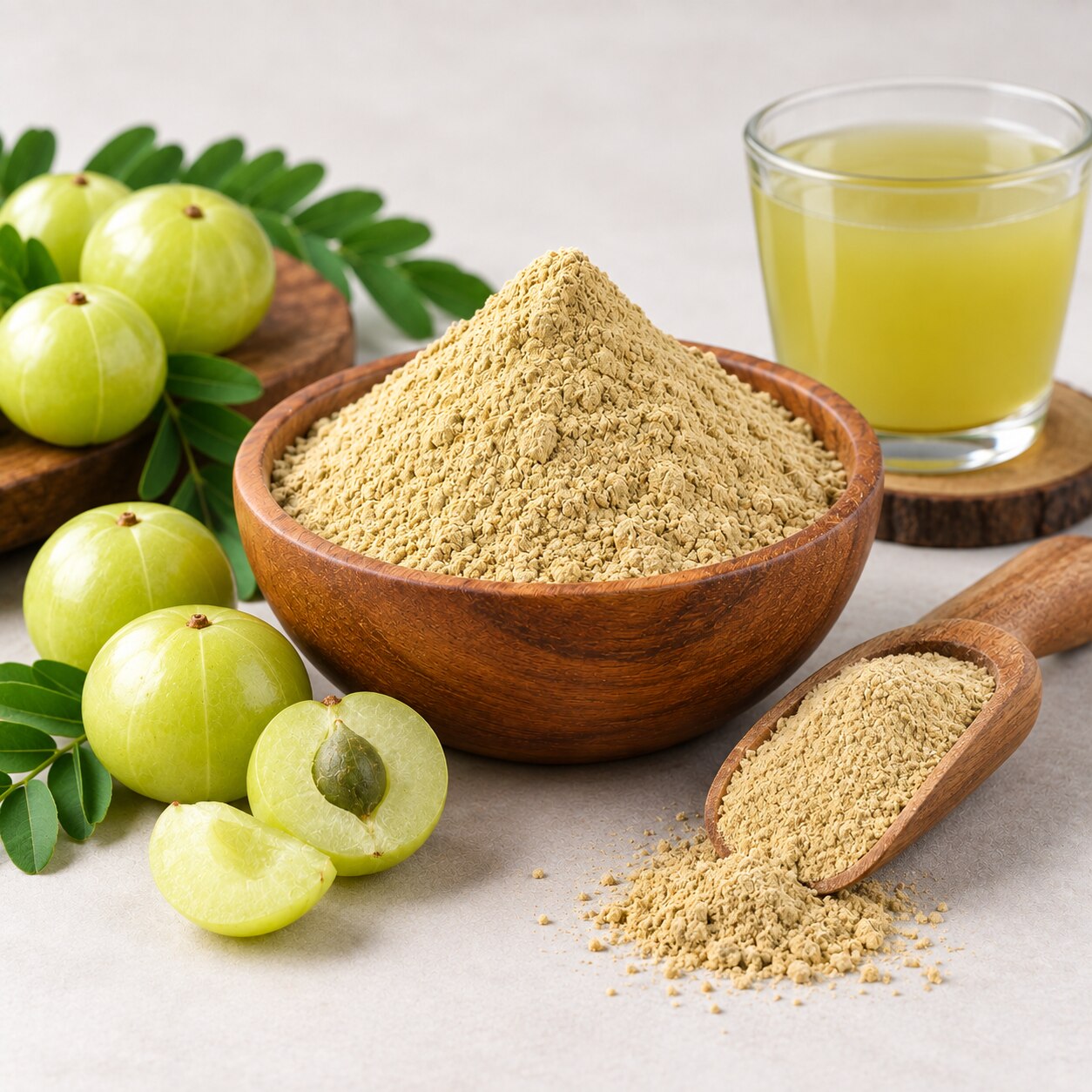
 | FRUIT POWDERS 🌿Prime Herbonix Amla Powder is made from carefully selected Indian Gooseberries (Amla), one of the most valued fruits in traditional wellness... View product → |
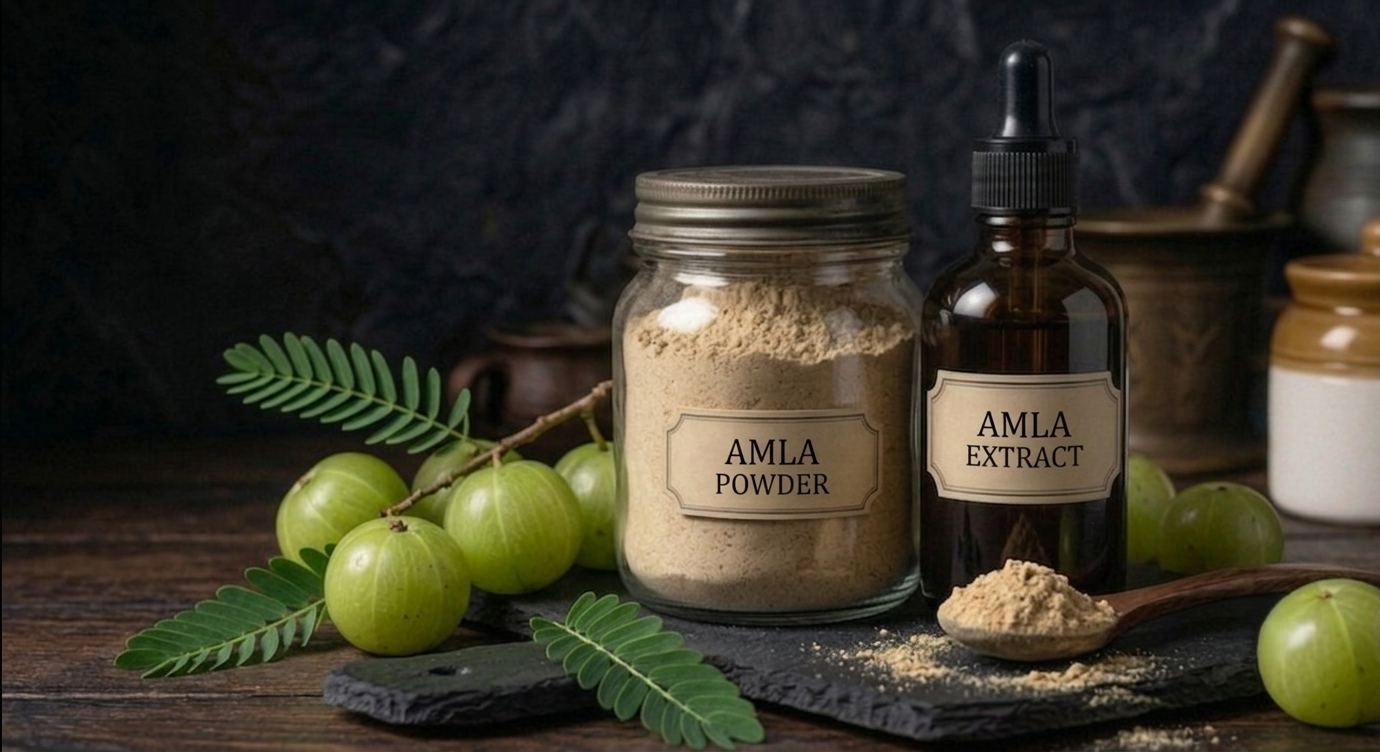 | HERBAL POWDERS & EXTRACTS Prime Herbonix Amla Powder & Extract are derived from carefully selected Indian Gooseberries (*Emblica officinalis*) that are processed under... View product → |
Frequently asked questions
Should supplement manufacturers buy amla powder or extract?
Choose powder when your formula uses whole-fruit material and has room for its serving weight. Choose extract when you need a concentrated ingredient, a defined marker level or a smaller capsule dose.
What should an amla extract quotation specify?
Require the plant part, extraction ratio, extraction solvent, marker compound and assay method, along with moisture, microbiological limits, heavy-metal limits, pesticide testing and shelf life.
What belongs on an amla powder or extract batch-approval checklist?
Check the certificate of analysis against the purchase specification, including identity, appearance, moisture, microbiology, heavy metals, pesticides, contaminants, batch number and retest or expiry date.
How do dosage form and claims affect the choice?
Capsules have tighter fill limits, while sachets allow more powder but need flavour control. Match the ingredient’s evidence and tested marker level to the claim permitted for your finished product.
How should you compare an amla supplier in Pune?
Request identical documents and samples from each supplier, test them in your intended formula, compare sensory performance and analytical results, then approve the supplier after a controlled trial.