
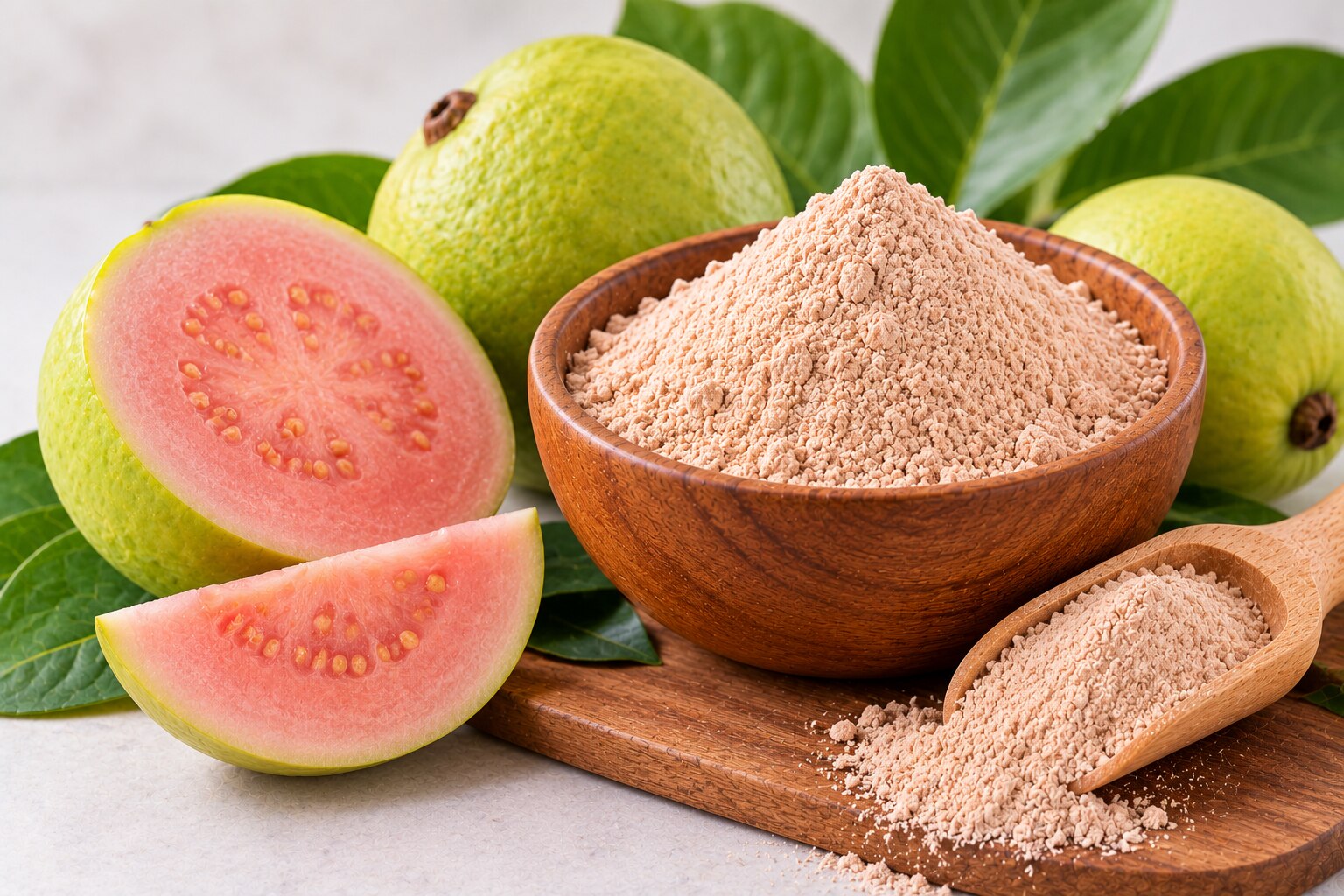
A guava powder that works in a biscuit may fail in a smooth filling because fruit solids, carriers, acidity, particle size and water activity vary widely between products. By the end, you will be able to match the powder format to the application, set a practical trial rate and write a purchase specification that protects flavour, texture and batch consistency.
Key takeaways
- Choose spray-dried powder for smooth recipes and fruit pieces for visible inclusions.
- Begin trials at 1–3% flour weight, then adjust flavour and colour.
- Control added water, acidity and heat before scaling guava powder recipes.
- Specify moisture, particle size, packaging and storage temperature in every purchase order.
Match the Guava Powder Format to the Product
Biscuits, cakes, baked fillings and inclusions usually need a practical dried powder, while premium no-bake products need better aroma and colour retention. Choose the format for the product’s texture and process, not for the word “guava” on the label.
| Option | Best fit | Main consideration |
|---|---|---|
| Whole-fruit powder | Biscuits, cakes, bars and rustic inclusions | Broad fruit character, with more fibre and variable colour |
| Pulp-based powder | Fillings, cakes, gummies and fruit-flavoured chocolate | Cleaner fruit profile and fewer insoluble particles |
| Peel-inclusive powder | Darker bars, inclusions and high-fibre recipes | Adds colour and fibre but can taste bitter or create specks |
| Seed-reduced powder | Smooth fillings, coatings, icings and moulded chocolate | Lower grit risk; confirm residual seed material |
| Hot-air or drum-dried powder | Biscuits, cakes, baked fillings and inclusions | Cost-effective when some aroma loss and colour variation are acceptable |
| Freeze-dried powder | Premium icings, coatings, moulded chocolates and no-bake products | Stronger fresh-fruit aroma and colour at higher cost; protect from crushing, oxygen and moisture |
| Spray-dried juice or puree powder | Fluid premixes, beverage-style dispersions and smooth gummies | A carrier improves flow but lowers guava intensity per kilogram |
Use instant juice powder for dispersibility, not as an automatic replacement for fruit solids in a chewy filling. Ask whether maltodextrin or another carrier is present, whether peel and seeds remain, and whether the guava percentage refers to fruit solids or finished powder.
For guava powder for bakery products, run a small trial before approving a production lot. Test dispersion, grit, colour, aroma after baking and finished texture.
Set a Trial Rate Without Overloading the Recipe
Start laboratory trials at 1%, 2% and 4% of flour weight for biscuits and cookies. These are trial points, not universal formula limits.
1. Use 1% to 3% of total batter weight for cakes and muffins. Use 3% to 8% of filling or confectionery mass for fruit fillings, bars and fudges. For gummies, begin at 1% to 3% of cooked mass, then check acidity, gel strength and flavour after heating.
2. Replace puree by matching fruit solids, not by matching kilograms. If 100 kg of puree contains 10% fruit solids, it supplies about 10 kg of solids; a powder containing 80% guava solids requires about 12.5 kg to supply the same amount. Correct that figure for the powder’s moisture and carrier.
3. Remove puree water gradually, then restore only the quantity needed to achieve the intended dough or batter consistency. Powder adds fibre, sugars, acids and insoluble material, so it changes absorption and viscosity. Liquid flavour adds aroma with almost no bulk; never replace it gram for gram with powder.
4. Record guava solids, aroma intensity, colour, pH, viscosity and finished weight for every trial. Compare these results against the control recipe before approval. This gives a buyer planning to buy guava powder India-wide a repeatable method for selecting both use rate and replacement basis.
Control Hydration, Acidity and Heat During Processing
Guava powder changes more than fruit flavour: it absorbs available water, thickens batter or filling, and can increase stickiness through sugars, pectin-like soluble solids and fibre. Compare the control and guava formula at equal total moisture, then measure flow, deposited weight and baked yield.
| Check | Control formula | Guava trial |
|---|---|---|
| Batter or filling flow | Record spread or flow time | Record the same measure after powder hydration |
| Deposited weight | Confirm target weight per piece | Check whether higher viscosity changes the dose |
| Baked yield | Weigh the finished batch | Check water loss, density and final weight |
Do not approve a powder from moisture percentage alone. Measure water activity (aw), set a receiving limit, and validate that limit with the intended package and shelf life. As reference points, most bacteria stop growing below aw 0.90, yeasts below 0.88 and moulds below 0.80; xerophilic moulds and osmophilic yeasts can grow lower.
Low aw also does not prevent caking, so use a moisture-barrier pack.
Request pH and titratable acidity. Guava acidity can change sodium-bicarbonate balance, browning and perceived sweetness. During baking, volatile aroma compounds decline faster than fruit solids, colour and fibre, so assess aroma and colour after the actual oven cycle.
Add a natural or heat-stable flavour only if the target profile needs it; adding unlimited powder can make the product dense, sour, gritty or too dark. If vitamin C supports a claim, verify it with a current lot-level assay.
Prevent Clumps, Grit and Uneven Fruit Distribution
Sieve guava powder before weighing, then premix it with 5 to 10 parts of flour, sugar or another dry ingredient before adding it to the main batch. This prevents concentrated pockets that produce clumps and uneven fruit distribution.
| Particle format | Main texture risk | Best control |
|---|---|---|
| Coarse seed, peel or pulp | Grit, dark specks and sediment | Specify particle size and permit only approved insoluble material |
| Very fine powder | Dusting, caking and rapid moisture uptake | Use controlled addition and moisture-barrier storage |
| Carrier-based spray-dried powder | Better flow but lower guava intensity per kilogram | Compare flavour on a guava-solids basis |
| Carrier-free fruit powder | Stronger solids but stickier handling | Test flow, caking and dosing before approval |
For a fat-based coating or chocolate compound, disperse the powder into a compatible portion of melted fat before combining it with the full mass. For a water-based filling, make a smooth slurry with part of the formula liquid and add it under agitation.
Do not dump powder onto a wet surface. The outer layer hydrates first and traps dry powder inside, leaving stubborn lumps in the filling.
Ask for mesh size or D-values, not merely “fine.” Specify whether insoluble seed material is permitted, then request a retained sample for side-by-side sieve and sensory checks. A guava fruit powder manufacturer should disclose whether the powder is coloured, sulphited or blended with another fruit ingredient.
Pink or red colour alone proves neither identity nor potency.
Write a Purchase Specification That Holds Up in Pune Storage
Approve a supplier only after the RFQ defines the powder and the receiving test. Specify botanical source, fruit part, drying method, guava-solids percentage, carrier or processing aid, moisture, water activity, mesh or particle-size range, pH, titratable acidity and colour limits.
| RFQ comparison | What to request | Approval basis |
|---|---|---|
| Product identity | Whole-fruit, pulp-based or juice powder; botanical source; fruit part; drying method; carrier; guava-solids percentage | Match the intended bakery or confectionery application |
| Cost and supply | Minimum order quantity, lead time, packaging size and delivered shelf life | Compare delivered cost per kilogram of guava solids, not nominal powder price |
| Lot evidence | Certificate of analysis, total plate count, yeast and mould, Salmonella absence, applicable pathogen results, heavy-metal and pesticide compliance | Accept only current lot-level results |
| Traceability | Incoming fruit or powder lot, dispatched batch code, retained-sample policy, allergen and cross-contact declaration | Require a record that follows the material through dispatch |
For a guava powder supplier for bakery in Pune, require multiwall bags with a food-grade inner liner, sealed cartons or another moisture barrier. Reject torn seals, insects, heavy caking and sun-heated packs; store opened material sealed, off the floor and away from monsoon humidity, heat and direct light.
Prime Herbonix Health Products Private can be compared using these same documents and an application sample, not a catalogue label. A guava powder bulk supplier in Pune must provide traceability from incoming material to dispatched batch.
Related products
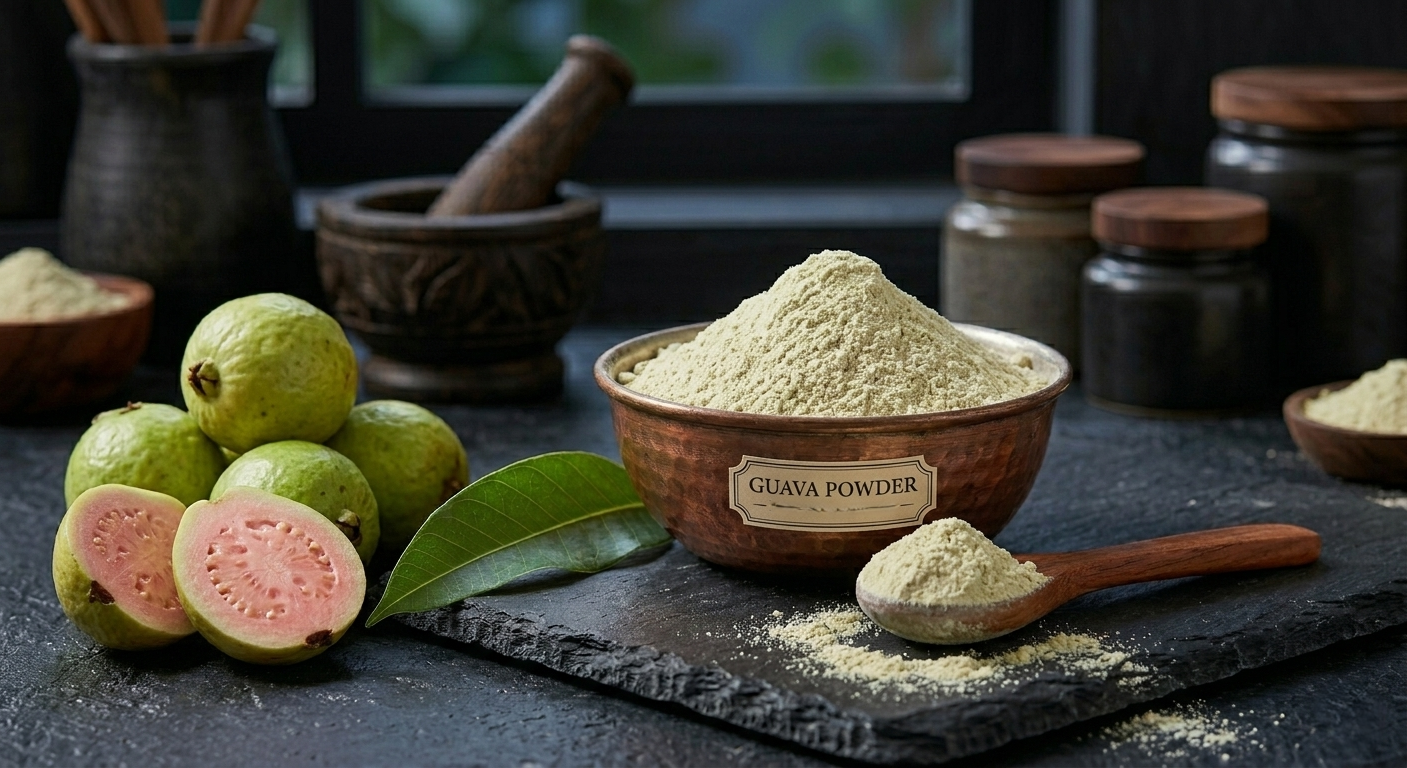 | FRUIT POWDERS Prime Herbonix Guava Powder is produced from carefully selected premium guava fruits that are processed using advanced drying techniques to preserve... View product → |
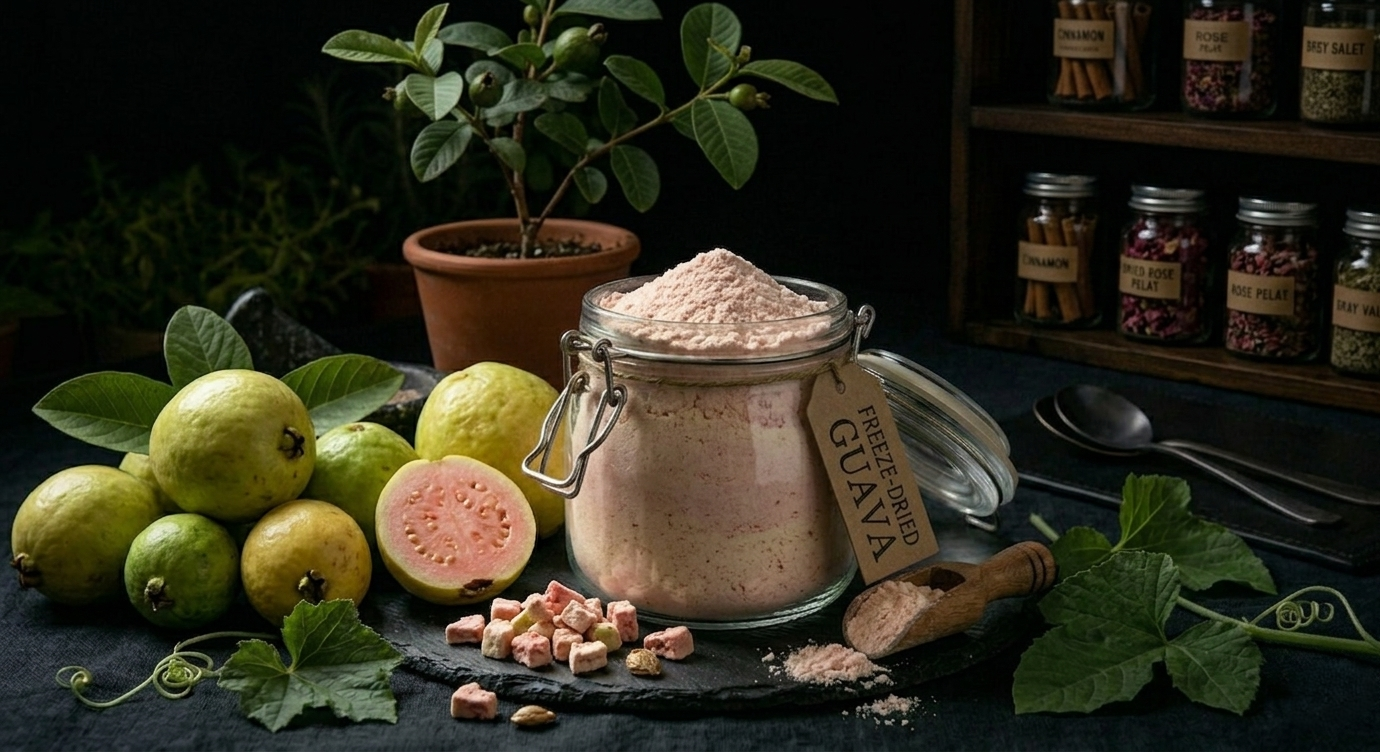 | FREEZE-DRIED VEGETABLE & FRUIT POWDERS /SLICES /CHUNKS Prime Herbonix Freeze-Dried Guava Powder is produced from carefully selected ripe guavas using advanced freeze-drying technology to preserve their... View product → |
Frequently asked questions
Which guava powder format suits bakery and confectionery products?
Use a practical dried powder for biscuits, cakes and baked fillings. Choose a format with stronger aroma and colour retention for premium no-bake products, and use fruit pieces when you want visible inclusions.
What trial rate should you use for guava powder in bakery products?
Start at 1–3% of flour weight, then adjust for flavour strength, colour, sweetness and the powder’s moisture contribution. Run separate trials for doughs, batters, fillings and confectionery systems.
How do you control hydration, acidity and heat with guava powder?
Reduce or rebalance liquid after checking the powder’s moisture and fibre content. Measure the finished product’s acidity, add guava before final mixing, and compare aroma and colour after the intended baking or heating cycle.
How can manufacturers prevent guava powder clumps and uneven distribution?
Sieve the powder, preblend it with part of the flour or sugar, add it gradually under agitation, and check the mix for hard particles before depositing or baking.
What should a guava powder purchase specification include for Pune storage?
Specify moisture limit, particle size, colour, flavour, acidity or pH where relevant, microbiological limits, allergen status, packaging material, batch coding, shelf life, storage temperature and protection from humidity.
Related product
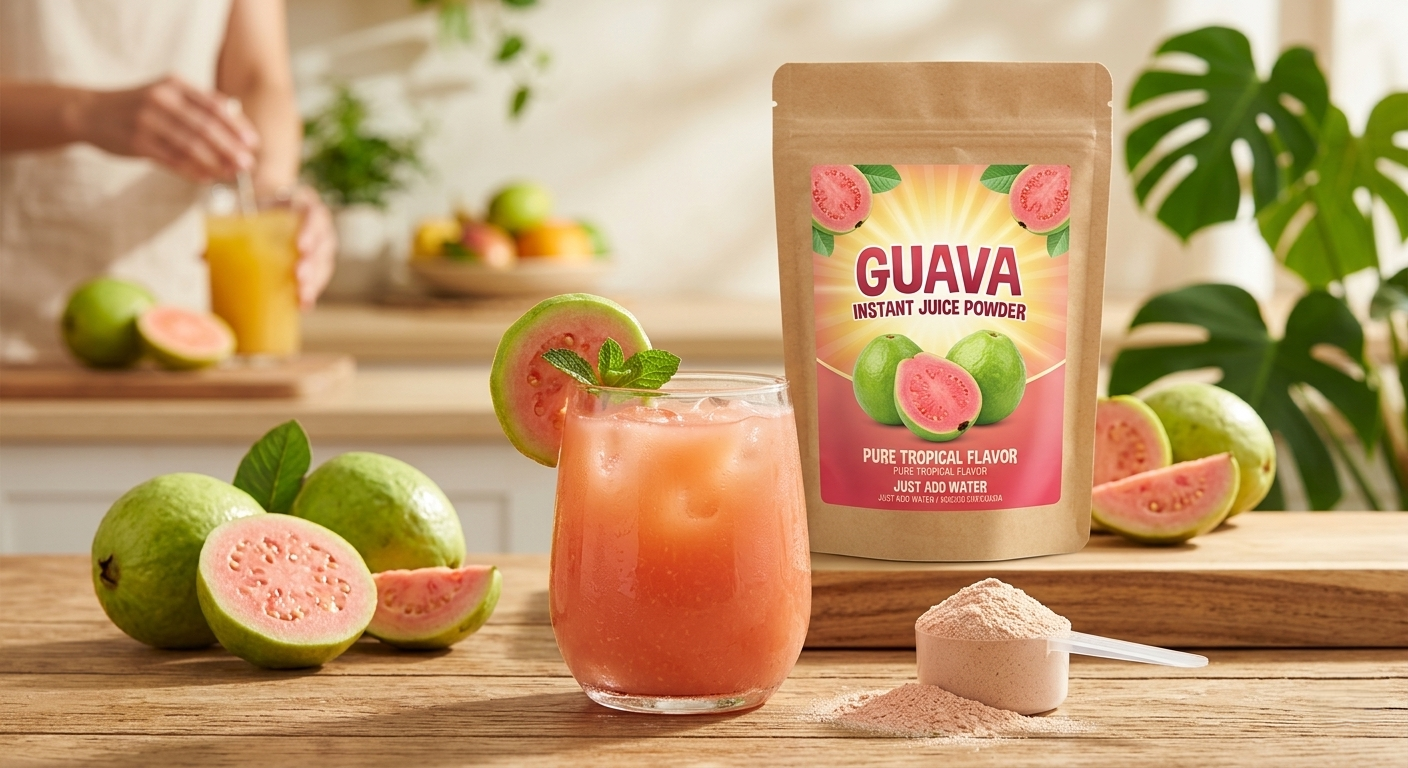 | INSTANT JUICE PREMIX POWDERS Prime Herbonix Guava Instant Juice Powder is made from premium-quality guavas, celebrated for their unique tropical flavor, refreshing aroma, and... View product → |